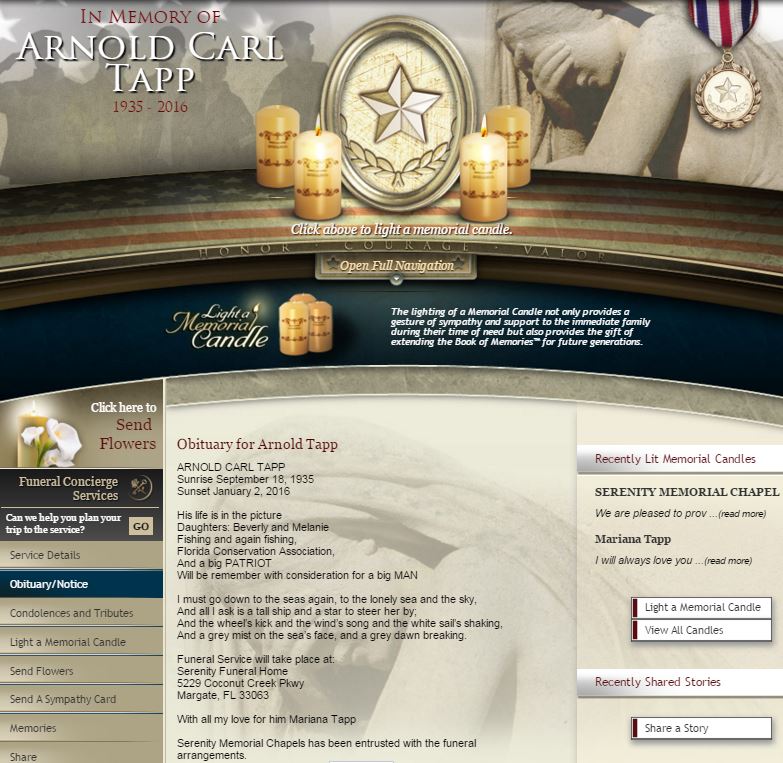
 Carl Tapp (also known as Makahayan and American Advocate) made initial contact with me during the summer of 2009.
He contacted me through his youtube account (youtube.com/MAKAHAYAN) and stated that he’d seen the eBay auction for Barack Obama’s Kenyan birth certificate and also read news accounts published at World Net Daily (WND.com) regarding the eBay auction.
Back at that time I hadn’t published any youtube videos at all but I used my youtube account (youtube.com/InspectorSmith) for communication and I’d made promises that I would soon publish a video(s) displaying Barack Obama’s Kenyan birth certificate.
Listed and linked directly below are a number of the first articles published at World Net Daily regarding the eBay auction for Obama’s Kenyan birth certificate:
June 27, 2009 by Bob Unruh: For sale on eBay: Obama’s ‘Kenyan birth certificate’ – Seller claims Mombasa document ‘certified copy’
June 27, 2009 by Drew Zahn: ‘Proof’ of Kenyan birth twice scrubbed by eBay – But seller of ‘Obama’s birth certificate’ dodges administrators to post 3rd time
June 28, 2009 by Drew Zahn: ‘Kenyan birth certificate’ remains eBay mystery – Investigator who traveled to Africa ‘skeptical’ document is real deal
June 29, 2009 by Drew Zahn: Will ‘truth about Obama’ be sold on eBay? Bids soar past $15,000 for alleged proof of president’s Kenyan birth
June 30, 2009 by Drew Zahn: eBay warns buyers off $1 mil ‘Kenyan birth certificate’ – Administrators tell those who contacted seller not to respond again
July 01, 2009 by Bob Unruh: THE LATEST ON EBAY’S ‘KENYAN BIRTH CERTIFICATE’ – Now it’s an autographed photograph for sale
July 19, 2009 by Drew Zahn: ‘Birth certificate’ seller vanishes into thin air – Dubious eBay character dodges agent, lawyer, verification team
August 22, 2009 by Drew Zahn: eBay seller releases video of ‘Obama birth certificate’ – Elusive Lucas Smith films alleged Kenyan document
As far as I can remember those are all of the articles which World Net Daily (WND.com) published up until, and upon, the publication of the first youtube video at the InspectorSmith youtube channel.
Carl Tapp was a supporter before the publication of the first youtube video. I specifically remember receiving youtube messages from him prior to publishing any videos because he talked about how and why that I should not allow others to rush me into, of force me into, publishing a video until I felt that the appropriate time had arrived.
Carl will be greatly missed here at the Was Obama Born in Kenya blog . I’ve known about Carl’s death now for a couple of weeks. On the 13th of this month (January 2016) I started writing this report regarding his passing. I felt sad and somewhat lost. Carl’s passing made me realize that someday death is coming for all of us. Up until this point I sort of assumed that I was going to live forever.
Over the course of the last couple of weeks I’ve tried to complete the writing of this report but there was some sort of block that I was experiencing my head.
I tried writing other things for an entirely unrelated project that I was working on and I had limited success with that and was able to write a couple reports (totally unrelated to the WOBIK blog). I even filmed a short a video. However, whatever I did it seemed that I couldn’t get anything out of mind and into this report here regarding the passing of my friend Carl Arnold Tapp.
Earlier tonight (or perhaps last night because as of right this moment it’s well passed midnight) I discussed Carl’s death with a friend of mine. After the discussion I knew that it was time for me to finish this report regarding Carl’s passing.
Throughout the several years that I known Carl I began to sense that he and I likely had vastly different opinions regarding many subjects including some political beliefs. However, I’m a firm believer that friends don’t need to share all of the same beliefs.
Moreover, after some thought I realized that Carl and I did have a number of things in common and not just the fact that we both believe that Barack Obama was born in Mombasa, Kenya and the he is ineligible to be President of the United States.
I believe that Carl and I also had the following common:
- Although we were both proud to be Americans we both married foreign-born women. (NOTE: I believe that the name of Carl’s wife is Mariana Tapp and even though it appears that they may been separated (?) before his passing she did state in his obituary that, “I will always love you.“
- We both enjoyed fishing
- We’ve both lived in Florida (at different times)
Carl’s full name was Arnold Carl Tapp and some other interesting information regarding this American patriot is provided below:
a. Carl was a veteran and served four (4) years in the U.S. Air Force. His rank is listed as Airman First Class.
b. Carl was 80 years of age at the time of his death but at age 79 he was still both willing and eager to work. He was seeking employment and listed the following online in his search for a job (he also included the attached picture of himself):
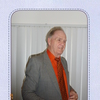 My only source of income is social security ( $ 1079 per month ) I am unable to stand or walk for very long , and must have something to do while seated at a company or at my home . My experience is assembly of wooden and mechanical items and quality control inspection . I could also do editing , proof reading and correction of articles , letters , publications , etc . Please contact me and try to help me work and pay my own way . THANK YOU .
Arnold Carl Tapp was born on September 18, 1935 and he left us on January 2, 2016. His funeral service was held at the Serenity Funeral Home, 5229 Coconut Creek Pkwy, Margate, Florida 33063.
Our friend and compatriot Bruce Steadman recently stated the following regarding Carl:
He was a GREAT, LOYAL AND UNWAVERING FRIEND TO WOBIK SINCE THE VERY BEGINNING.
I couldn’t agree with you more, Bruce. Carl will be greatly missed here at the Was Obama Born In Kenya blog and the InspectorSmith Forum.
Everyone is welcome to exercise their free speech in the comments section below. There are no stipulations of political correctness on this blog. Speak your mind, give us your thoughts, both objective and subjective. Share your ideas, hunches, inklings or your expertise. Please provide recommendation and corrections if you spot errors in fact within the blog report. Lastly, remember that posting a comment is much like casting a vote, so please do so.





 Evidently the mother of Barack Hussein Obama II – Stanley Ann Dunham – was treated for syphilis at hospital in Kenya.